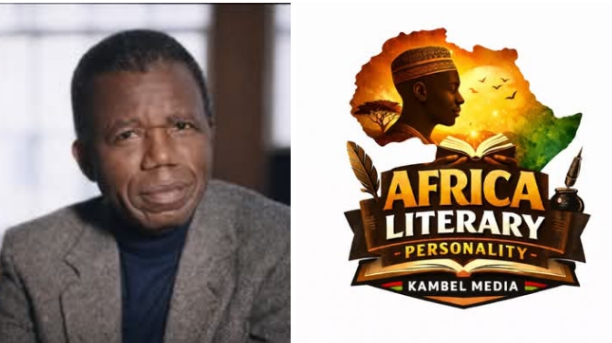
Chinua Achebe stands as a foundational figure in modern African literature, widely regarded as the father of African fiction written in English. His works marked a decisive turning point in how Africa and Africans were represented in literature, shifting the narrative from colonial distortion to authentic self-representation. Through his novels, essays, and public intellectual engagement, Achebe restored African voices to the center of global literary discourse and affirmed literature as a tool for cultural preservation and historical correction.
Achebe was born on November 16, 1930, in Ogidi, a historic town in present-day Anambra State, southeastern Nigeria. His birth coincided with a period of intense cultural transformation, as British colonial rule and Christian missionary activity increasingly reshaped indigenous African societies. Traditional Igbo social structures, belief systems, and moral codes were being questioned, suppressed, or reinterpreted under colonial authority. Achebe grew up observing the tensions, negotiations, and compromises between these competing worlds. This environment of cultural collision and coexistence later became the emotional and intellectual backbone of his works. His lifelong literary mission can be traced to this early awareness of a society struggling to define itself amid change.
Achebe was the fifth of six children born to Isaiah Okafo Achebe and Janet Anaenechi Iloegbunam Achebe, both respected members of their community. His parents were among the earliest converts to Christianity in Igbo land, embracing the new faith, while still maintaining links to their cultural roots. His father worked as a teacher and catechist for the Church Missionary Society, embodying the values of discipline, literacy, and Christian morality. His mother, however, played an equally significant role by preserving indigenous storytelling traditions within the household. Through her folktales, songs, and moral anecdotes, Achebe absorbed the cadence and wisdom of Igbo oral culture. This blend of Christian ethics and indigenous narrative tradition gave Achebe a rare cultural balance that shaped his intellectual identity.
Although Achebe was raised within a Christian framework, his daily life was deeply immersed in the Igbo culture. He observed traditional ceremonies, seasonal festivals, marriage rites, funeral rituals, and communal gatherings that structured village life. Elders settled disputes in public assemblies, proverbs conveyed collective wisdom, and ancestry defined social identity. Achebe listened attentively to conversations among adults, learning how language functioned as a tool of authority, persuasion, and social harmony. These early observations nurtured his sensitivity to cultural detail and social nuance. Later, when he recreated Igbo society in his novels, his portrayals were neither romanticized nor dismissive, but grounded in lived experience and intimate knowledge.
Achebe’s formal education began at St. Philips’ Central School, Ogidi, where he quickly distinguished himself as an exceptionally bright pupil. His academic excellence earned him admission to Government College, Umuahia, one of the most elite secondary schools in colonial Nigeria. At Umuahia, Achebe encountered a rigorous British-style curriculum that emphasized discipline, debate, and literary analysis. He read English classics and developed strong language skills, but he also noticed the glaring absence of African perspectives in what he studied. When Africa appeared in textbooks, it was often portrayed as backward, voiceless, or uncivilized. This imbalance quietly unsettled Achebe and planted in him an early sense of intellectual resistance. He began to recognize education as both a tool of empowerment and a means of cultural distortion.
In 1948, Achebe gained admission to University College, Ibadan, Nigeria’s first degree-awarding institution and a major center of intellectual life in colonial West Africa. Initially enrolled to study medicine, he soon realized that his passion lay elsewhere and switched to English, history, and theology. This decision marked a turning point, aligning his academic path with his emerging literary interests. At Ibadan, Achebe encountered European literary works that dominated the canon, many of which presented Africa through a colonial lens. Joseph Conrad’s Heart of Darkness, in particular, left a lasting impression on him for its dehumanizing depiction of Africans. Rather than responding with anger, Achebe developed a calm but determined resolve to tell Africa’s story from within. He began to see writing as a corrective force against historical misrepresentation.
During his university years, Achebe became actively involved in student intellectual life, participating in literary discussions, debates, and creative writing. He experimented with short stories, essays, and early narrative sketches, gradually shaping a style that blended English prose with African idioms and rhythms. These formative experiments allowed him to test how African experiences could be authentically expressed in a European language without losing cultural integrity. His growing awareness of colonial discourse reinforced his belief that silence was dangerous. Achebe became convinced that unless Africans narrated their own realities, others would continue to define them inaccurately. This conviction later crystallized into his famous assertion that storytelling is central to reclaiming dignity and identity.
After completing his studies, Achebe joined the Nigerian Broadcasting Service (NBS), a career move that further refined his storytelling skills. Working in broadcasting exposed him to diverse audiences and sharpened his sensitivity to clarity, tone, and narrative pacing. He learned how stories could educate, entertain, and influence public opinion across cultural boundaries. The discipline of scripting and programming strengthened his command of language and dialogue. It was during this professional phase that Achebe completed the manuscript of Things Fall Apart, drawing upon his childhood memories and cultural insights. The novel emerged as both a personal and cultural response to years of observation and reflection.
Achebe’s intellectual influences were wide-ranging and deeply layered. He drew inspiration from Igbo oral traditions, including proverbs, myths, and communal storytelling techniques, which informed the structure and rhythm of his prose. Biblical narratives influenced his moral seriousness and symbolic imagination, while Western literary forms provided technical frameworks for storytelling. He admired writers such as William Shakespeare for their human complexity and Jonathan Swift for their moral satire. Yet Achebe remained critically aware of how Western literature often marginalized African voices. Above all, his most powerful influence was the African lived experience, its histories of endurance, its moral struggles, its communal values, and its capacity for renewal.
In essence, Chinua Achebe’s life was shaped by the intersection of tradition and modernity, Africa and Europe, orality and writing. His upbringing in a culturally hybrid environment, combined with a colonial education and early professional engagement with media, prepared him for a unique literary role. Achebe emerged not merely as a novelist but as a cultural mediator and moral voice. His formative experiences equipped him to challenge historical distortions and affirm African humanity with clarity and dignity. Through his writing, he committed himself to restoring memory, asserting identity, and ensuring that Africa spoke for itself in the global conversation.
Author: Moses A. Katamani
Email: infomoskambel@gmail.com
Website: www.kambelconsult.com