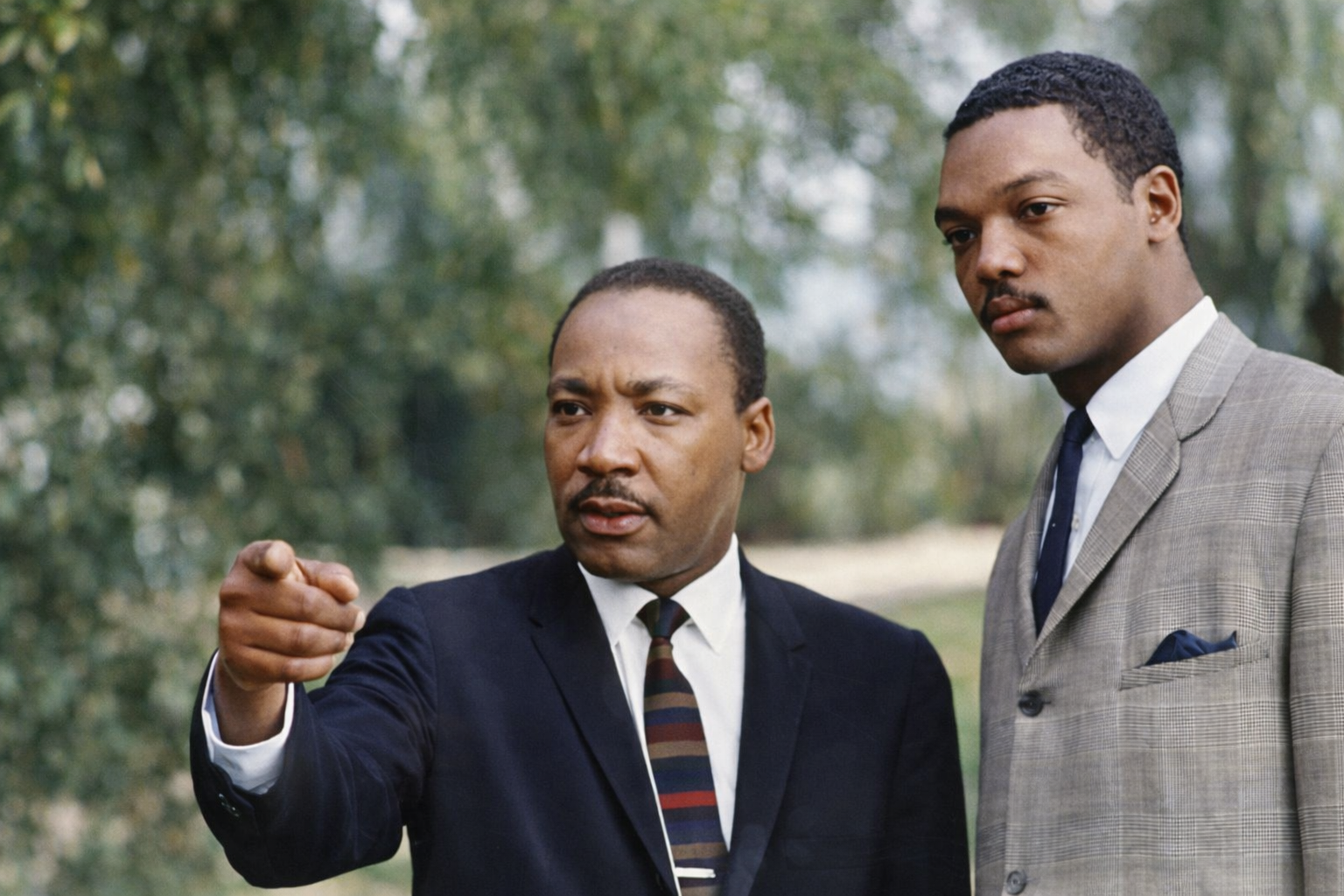
As we celebrate Black History Month, we are invited not only to remember the past but to confront the present with clarity and courage. The enduring relevance of Martin Luther King Jr. continues to echo across generations, particularly through his profound work, “Where Do We Go from Here: Chaos or Community”. In this seminal text, Dr. King does not offer comfort, he offers a challenge. He calls humanity to reckon with the deep fractures of division, economic injustice, and systemic inequality. However, he does not leave us in despair; instead, he points toward a higher path; one rooted in nonviolence, moral responsibility, and the transformative vision of the Beloved Community.
The life and legacy of Jesse Jackson further illuminate this path. As a close ally of Dr. King and a towering figure in his own right, Jackson carried forward the torch of justice into new generations. His journey was not merely political; it was deeply moral and spiritual, shaped by the same principles that guided King. His passing serves not only as a moment of mourning but as a solemn reminder that the struggle for justice is not confined to history; it is a living, breathing responsibility placed upon each generation.
At the heart of Dr. King’s philosophy lies the concept of the “Beloved Community”, a vision of society grounded in justice, equality, and shared humanity. This was not an abstract or distant dream, but a practical and urgent goal. King believed that humanity is bound together in a single garment of destiny, where the suffering of one diminishes all. In this vision, justice is not selective, and dignity is not conditional. It demands that we move beyond individualism and embrace a collective responsibility for one another’s well-being.
Dr. King’s critique of society remains strikingly relevant today. He warned against the dangers of a “thing-oriented” society, one that prioritizes wealth, status, and material gain over human dignity. In contrast, he called for a “person-oriented” society, where policies, economies, and institutions are designed to uplift human life rather than exploit it. This message resonates deeply in a world still grappling with inequality, reminding us that true progress cannot be measured solely by economic growth, but by the well-being of the most vulnerable.
In many ways, Jesse Jackson’s life stands as a living testament to these ideals. Through decades of activism, he translated philosophy into action; addressing issues of poverty, racial injustice, and economic disparity with unwavering commitment. His leadership demonstrated that nonviolence is not passive; it is a powerful, organized force capable of reshaping systems and empowering communities. He inspired countless individuals to believe that change is not only possible, but necessary.
Reflecting on both King and Jackson compels us to confront an uncomfortable truth: the struggle they fought has not yet been fully won. The questions raised in Where Do We Go from Here remain as urgent now as they were in 1967. How do we dismantle systems that perpetuate inequality? How do we build societies that are inclusive not just in words, but in action? These are not rhetorical questions; they are moral imperatives demanding thoughtful, collective response.
King’s unwavering belief in nonviolence and love as transformative forces continues to inspire movements across the globe. He understood that love, when combined with justice, becomes a revolutionary power; capable of disarming hatred and fostering reconciliation. This philosophy was not theoretical; it was lived and demonstrated in the streets, in protests, and in everyday acts of courage. It showed that true strength lies not in domination, but in the ability to uplift and unify.
Jackson’s work, particularly through organizations such as the Rainbow/PUSH Coalition, exemplified how these principles could be applied in practical and tangible ways. His advocacy for economic empowerment, education, and equal opportunity highlighted the importance of addressing not only social injustice but also economic inequality. He recognized that dignity is closely tied to opportunity, and that justice must be both moral and material.
The “Beloved Community”, therefore, is not a distant utopia; it is a call to action. It challenges us to examine our roles within society and to ask whether we are contributing to justice or perpetuating inequality. As King so powerfully stated, “Power at its best is love implementing the demands of justice.” This vision calls for active participation, urging individuals, institutions, and nations to align their power with compassion and fairness.
Though the passing of Jesse Jackson marks the end of an era, it does not mark the end of the mission. His legacy, alongside King’s teachings, continues to guide and inspire. It calls on us to amplify marginalized voices, to challenge unjust systems, and to remain steadfast in the pursuit of equity. Their lives remind us that progress is not inevitable; it is the result of deliberate and sustained effort.
As we navigate the complexities of our modern world, King’s wisdom remains a guiding light. He urged us to remain constructively dissatisfied, to reject complacency and to strive relentlessly for a world where dignity, justice, and opportunity are not privileges for a few, but rights for all. His message is both timeless and urgent, calling us to action in every generation.
This Black History Month, let us move beyond remembrance into renewal. Let us honor the legacies of Martin Luther King Jr. and Jesse Jackson not only with words, but with action. Let us recommit ourselves to the pursuit of justice, equality, and the realization of the Beloved Community. And in doing so, let us continue the conversation; exploring, questioning, and building a world that reflects the highest ideals of our shared humanity.
Author: Moses A. Katamani
Email: infomoskambel@gmail.com
Website: www.kambelconsult.com