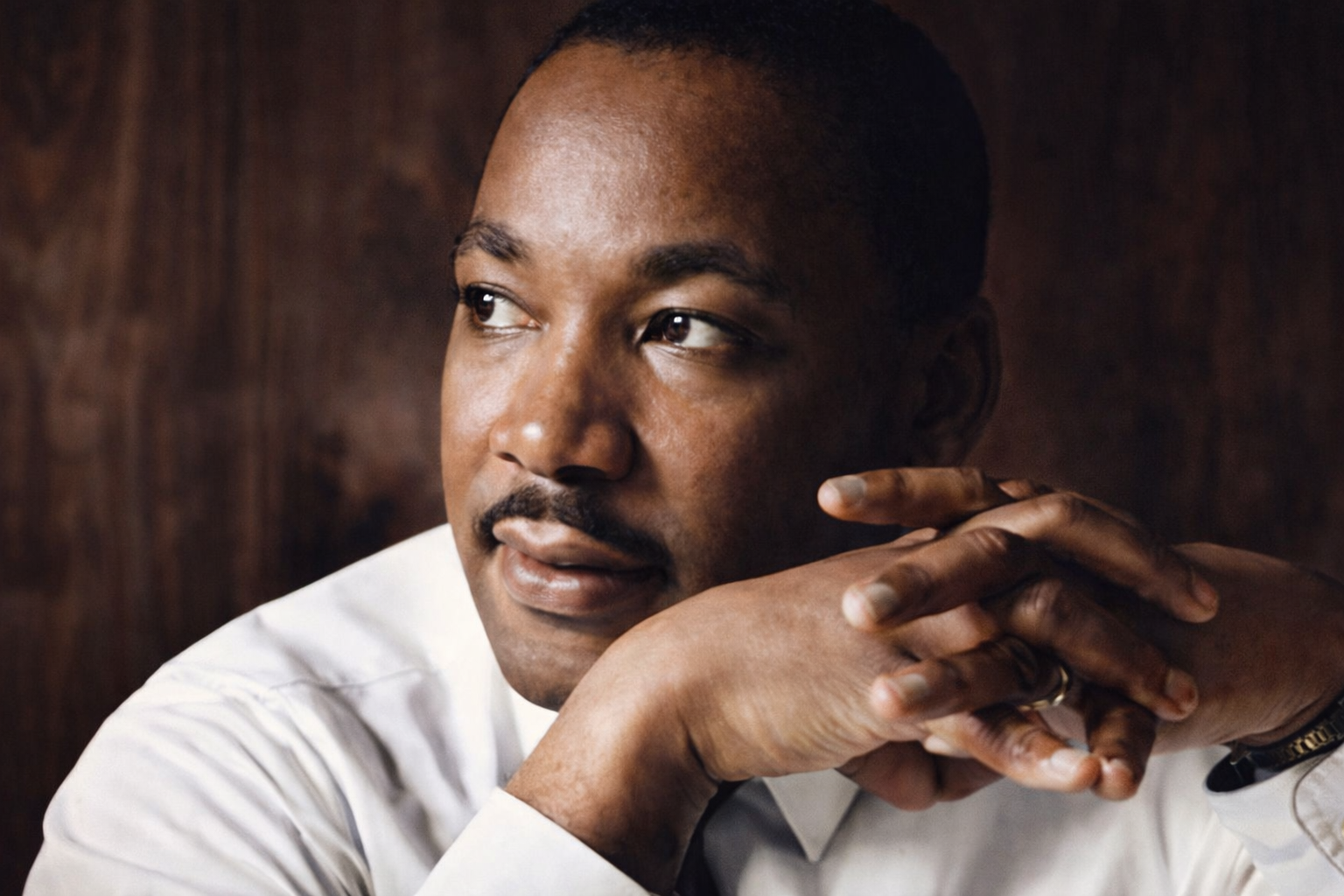
Great leaders are rarely born in isolation; they are shaped slowly and deliberately within societies that teach them how to see the world and how to respond to it. For Martin Luther King Jr., faith was not an abstract doctrine discovered in adulthood or adopted for public appeal, it was a living presence that surrounded him from his earliest years. Long before he stood before nations as a moral voice of conscience, he was first a son listening closely to family wisdom, a child seated in church pews absorbing sacred rhythms, and a quiet observer of courage practiced not in grand gestures, but in everyday acts of dignity and resolve.
The King household was a moral classroom where values were not merely taught through words but modeled through daily conduct. Raised in Atlanta, Martin grew up in a family that understood dignity as non-negotiable, even in a society structured to deny Black people their humanity. Conversations within the home were rich and purposeful, shaped by scripture, Black istory, and lived encounters with injustice. These discussions were not theoretical; they were grounded in survival, self-respect, and hope. The lessons learned around the family table formed the ethical backbone that would later sustain King when the weight of national expectation and moral crisis pressed heavily upon him.
At the center of this formative environment stood his father, Rev. Martin Luther King Sr., a commanding Baptist preacher whose presence carried authority rooted in conviction rather than fear. He openly rejected the mythology of Black inferiority that Jim Crow society sought to normalize. Known for his firmness, discipline, and moral clarity, King Sr. modeled resistance through integrity rather than rage, courage rather than bitterness. He taught his son that submission to injustice was incompatible with Christian faith, and that self-respect was not arrogance but a sacred duty owed to oneself and to God.
Equally influential in Martin’s development was his mother, Alberta Williams King, whose gentle demeanor concealed immense inner strength. A trained musician and deeply devout believer, she cultivated in her son a sense of emotional intelligence, reflection, and disciplined compassion. From her, Martin learned to listen before speaking, to feel deeply without becoming hardened, and to approach leadership with humility. She taught him often through example that moral authority was not expressed solely through forceful words, but through tenderness, patience, and grace.
Beyond the family home, the Black church became Martin’s first public classroom and civic arena. In an era when segregation severely restricted Black opportunity and visibility, the church stood as a sanctuary of affirmation and collective identity. It was one of the few institutions fully governed by Black communities themselves, providing not only spiritual nourishment but also political awareness, educational support, and social organization. Within its walls, dignity was reclaimed and purpose was affirmed in the face of systemic exclusion.
Inside the church, young Martin witnessed the transformative power of collective faith. Sermons were not merely theological reflections delivered from pulpits; they were acts of resistance, bold declarations of worth spoken into a hostile world determined to deny it. Choirs sang hope into weary souls, lifting spirits burdened by daily humiliation. Congregations practiced democracy, cooperation, and mutual care long before the nation fully extended those principles to them. Through these experiences, Martin Luther Jr. learned that faith was not passive, it was a force capable of shaping society and sustaining struggle.
These early church experiences instilled in King a profound understanding that religion must speak directly to real human suffering. Faith, he learned, could not be confined to heaven while injustice flourished on earth. Worship unconnected to social responsibility was incomplete, even hollow. Silence in the face of oppression was not neutrality; it was moral failure. This conviction would later compel him to challenge both political systems and religious institutions that preferred comfort over justice.
Yet King’s faith was never inherited uncritically or accepted without reflection. Even as a young man, he wrestled with doubt, questioning shallow religiosity and resisting blind conformity to tradition. This internal tension did not weaken his belief; it refined it. Through questioning, reading, and introspection, he moved toward a faith rooted in reason, ethics, and action rather than ritual alone. His spirituality matured through inquiry, not imitation, preparing him to articulate a belief system capable of engaging the complexities of modern society.
Gradually, King began to understand leadership as a sacred trust rather than a personal ambition. He observed how ministers were called upon not only to comfort the grieving and guide the faithful, but also to confront unjust systems and speak truth to power. This realization reshaped his sense of purpose. Faith, he came to believe, was not an escape from the world’s troubles, but a commitment to engage them, often at great personal cost, always with moral seriousness.
The convergence of family discipline and church-centered morality produced a leader grounded in service rather than self-promotion. King learned early that authority did not arise from dominance, charisma, or coercion, but from moral consistency and credibility. This foundation fortified him for the trials ahead. It enabled him to stand unshaken in the face of hostility, imprisonment, and threats to his life, anchored by a faith that had been tested quietly and thoroughly long before public acclaim or national attention arrived.
By the time Martin Luther King Jr. stepped into history’s spotlight, his moral compass had already been carefully calibrated. Family had taught him dignity, the church had taught him courage, and faith had taught him responsibility. Thus, before King led a movement, he was formed by a faith that demanded justice and by a society that believed moral leadership could indeed change the world.
Author: Moses A. Katamani
Email: infomoskambel@gmail.com
Website: www.kambelconsult.com