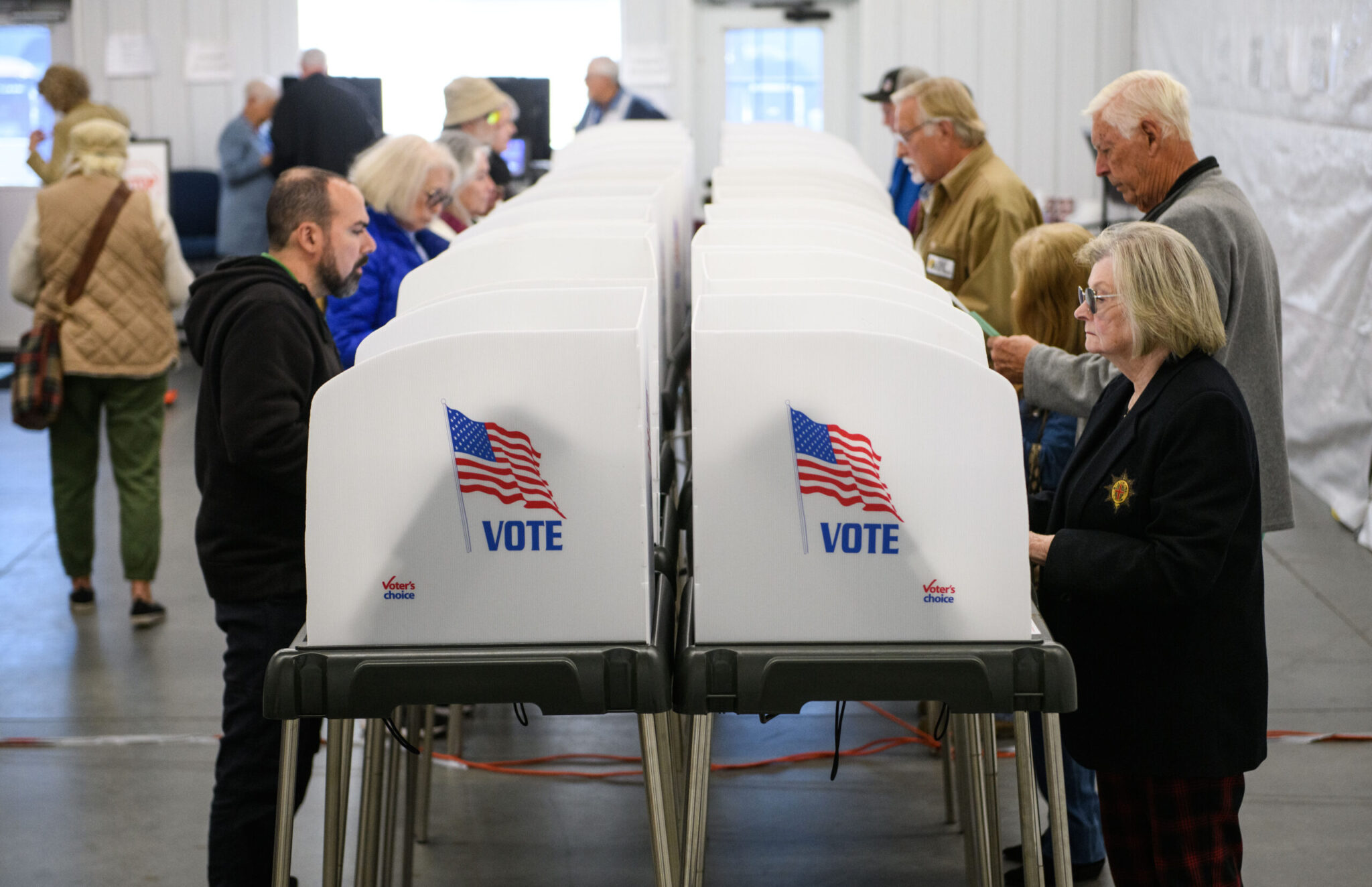
The long-standing contest over voting rights in the United States has once again surged to the forefront of national discourse, this time driven by the controversial SAVE Act. Framed by its proponents as a necessary safeguard for electoral integrity, the bill requires documentary proof of citizenship at the point of voter registration. Yet, beneath its legal language lies a deeper ideological divide, one that pits access against control, and raises a fundamental question: who should ultimately govern the mechanics of American democracy?
At the heart of the opposition stands House Democratic leader Hakeem Jeffries, who has argued that federal mandates, however well-intentioned, risk discouraging participation rather than strengthening trust. For Jeffries and his allies, the issue is not merely administrative but philosophical. They contend that while election security is essential, it must not come at the cost of accessibility, especially in a nation whose democratic identity is built upon broad civic inclusion.
Jeffries’ position reflects a broader constitutional tension that has shaped American governance for centuries: the balance between state authority and federal oversight. Elections in the United States have traditionally been administered at the state level, allowing for flexibility and local adaptation. However, moments of national crisis, particularly those involving civil rights have often prompted federal intervention. The SAVE Act thus revives an enduring question: should Congress impose uniform standards, or should states retain autonomy even at the risk of uneven protections?
Supporters of the bill, including Senator Mike Lee, argue that such concerns are secondary to the imperative of safeguarding elections from fraud. They point to widespread public support for voter identification laws as evidence that Americans value security at the ballot box. In their view, requiring proof of citizenship is not an obstacle but a commonsense measure, one that reinforces confidence in electoral outcomes and protects the sanctity of the vote.
Critics, however, see a different reality. They warn that the practical implications of the SAVE Act could be far-reaching and deeply unequal. Millions of Americans, particularly those from marginalized communities, low-income households, and even married women who have changed their names may struggle to produce the required documentation. Estimates suggest that over 21 million voting-age citizens lack immediate access to proof of citizenship, raising concerns that the law could disenfranchise legitimate voters under the guise of reform.
Historical precedents lend weight to these fears. In states such as Arizona and Kansas, similar requirements have resulted in tens of thousands of eligible citizens being blocked from registering. These cases serve as cautionary examples of how policy, even when designed with integrity in mind, can produce unintended and often inequitable outcomes. For voting rights advocates, the SAVE Act is less about protection and more about restriction.
Moreover, the rationale underpinning the bill has itself come under scrutiny. While proponents emphasize the need to prevent non-citizen voting, empirical evidence suggests that such incidents are exceedingly rare. Several states have reported negligible or even zero confirmed cases, leading critics to question whether the scale of the proposed solution matches the magnitude of the problem. In this light, the SAVE Act risks appearing as a disproportionate response, one that prioritizes perception over data.
Beyond ideology, there are also logistical concerns. Election administrators across the country have raised alarms about the cost and complexity of implementing the bill’s provisions. From verifying documentation to maintaining updated voter rolls, the administrative burden could strain already limited resources. In a decentralized system like that of the United States, such challenges are not merely technical, they have the potential to affect the efficiency and credibility of elections themselves.
Politically, the bill’s future remains uncertain. Although it has passed the House of Representatives, its path through the Senate is far from assured. Senate Majority Leader John Thune faces mounting pressure from Republican colleagues to advance the legislation, yet partisan divisions and procedural hurdles may ultimately stall its progress. The Senate, as so often in American politics, may become the battleground where principle meets pragmatism.
Voting rights advocates continue to push for alternative approaches, solutions that enhance security without erecting barriers. One such proposal is “back-end verification,” a system that places the responsibility of confirming eligibility on government agencies rather than individual voters. This approach, they argue, preserves both the integrity and inclusiveness of the electoral process, ensuring that no eligible citizen is turned away due to bureaucratic obstacles.
The United States has long wrestled with the complexities of voting rights, from the struggles that led to the Voting Rights Act of 1965 to contemporary debates over access and security. Each generation confronts its own version of this challenge, navigating the delicate balance between protecting democracy and expanding it. The SAVE Act is but the latest chapter in this ongoing narrative one that reflects both progress and persistent tension.
In sum, the question is not simply whether the SAVE Act will pass, but what it represents. Is it a necessary step toward securing elections, or a policy that risks narrowing the democratic space it seeks to protect? As lawmakers, advocates, and citizens continue to grapple with these issues, one principle must remain paramount: that democracy thrives not only when it is secure, but when it is accessible to all.
Author: Moses A. Katamani
Email: infomoskambel@gmail.com
Website: www.kambelconsult.com