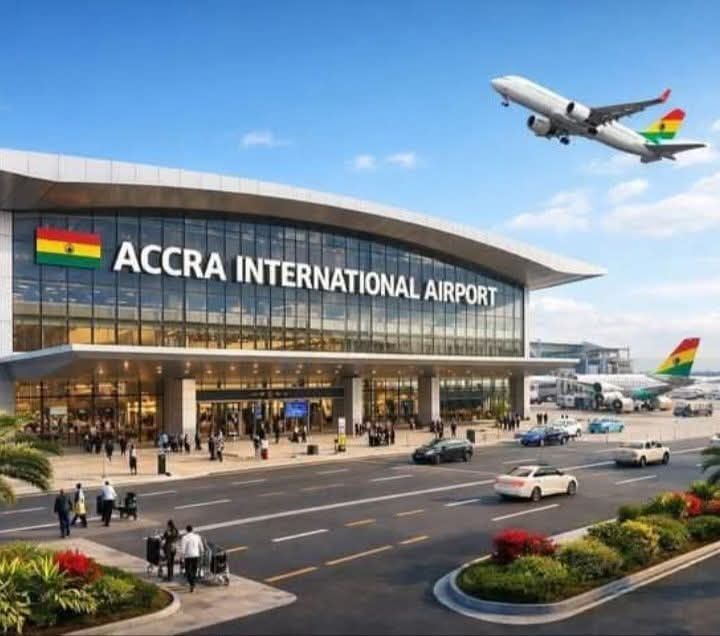
The Ghanaian government’s plan to rename Kotoka International Airport to Accra International Airport has reopened an old but unresolved national conversation about history, memory, and democratic values. Announced by Majority Leader Mahama Ayariga, the proposal set to be tabled before Parliament has been framed as part of a broader effort to align Ghana’s public institutions with the ideals of constitutional democracy. At its core, the debate is not merely about a name, but about what Ghana chooses to honor, remember, and project to itself and the world.
Airports are more than transit points; they are national symbols and first impressions. For many visitors, the airport is the first encounter with Ghana’s identity and historical narrative. As such, the name attached to the country’s main international gateway carries moral and political weight. The government’s argument is that a democratic republic must be intentional about the symbols it elevates, especially those tied to moments that disrupted constitutional rule.
Historically, the airport’s story mirrors Ghana’s political journey. Opened in 1958 as Accra International Airport, it was built during the optimism of Ghana’s early independence years under Dr. Kwame Nkrumah. At that time, the nation was positioning itself as a beacon of African self-determination, Pan-Africanism, and democratic governance, despite the growing strains and contradictions within Nkrumah’s rule.
The renaming of the airport in 1969 to Kotoka International Airport followed the 1966 military coup that overthrew Nkrumah’s government. Lieutenant General Emmanuel Kwasi Kotoka was one of the leading figures behind that coup, which marked Ghana’s first abrupt rupture of constitutional democracy. While opinions differ on Nkrumah’s leadership style and legacy, the fact remains that the coup inaugurated an era of military interventions that repeatedly destabilized Ghana’s democratic development.
Critics of the current airport name argue that honoring a coup leader institutionalizes the memory of unconstitutional change of government. In a country that has worked painstakingly to entrench democratic norms since the Fourth Republic in 1992, such symbolism appears contradictory. For them, democracy is not only about elections and institutions, but also about the values a nation publicly affirms through its monuments, street names, and national landmarks.
Samia Yaba Christina Nkrumah, daughter of Ghana’s first president, has long been one of the most consistent voices calling for the airport’s name to be reverted. Her advocacy is less about personal legacy and more about historical justice and democratic coherence. She and others argue that restoring the original name, Accra International Airport, would avoid replacing one contested figure with another, while reaffirming national unity and democratic continuity.
Lands and Natural Resources Minister Emmanuel Armah-Kofi Buah has echoed this position, describing the proposed renaming as a “welcome and long-overdue step.” In his view, maintaining the name of a coup leader on such a prominent national institution clashes with Ghana’s self-image as a stable democracy and a model for peaceful constitutional governance in Africa. His comments reflect a broader governmental stance that the issue is about principles, not personalities.
However, the debate also exposes the sensitive terrain of Ghana’s undemocratic past. Ghana has experienced coups, counter-coups, and periods of authoritarian rule, all of which involved actors from different ethnic and regional backgrounds. Addressing this history responsibly requires care, honesty, and restraint. The challenge is to confront past injustices without sliding into tribal bigotry or ethnic scapegoating, which would only deepen divisions rather than heal them.
Ghana’s strength as a democracy lies in its ability to reflect critically on its past without weaponizing identity. The question of Kotoka International Airport should not be reduced to ethnic loyalties or regional sentiments, but discussed within a national framework of democratic values, constitutionalism, and collective memory. A mature democracy must be able to say that while individuals may have played complex roles in history, coups themselves cannot be celebrated.
Parliament’s central role in debating and approving the bill is therefore crucial. By subjecting the proposal to open legislative scrutiny, the government signals that the process will be guided by law, public reasoning, and democratic deliberation rather than executive fiat. This approach reinforces the very democratic culture the renaming seeks to affirm.
In conclusion, the proposed change is an opportunity for Ghana to demonstrate how democracies deal with uncomfortable histories: by contextualizing them wisely. Renaming Kotoka International Airport back to Accra International Airport would neither deny history nor glorify it uncritically. Instead, it would affirm that Ghana, as a democratic nation, chooses to honor constitutional rule, national unity, and shared civic values without fear, without tribal prejudice, and with confidence in its democratic future.
Author: Moses A. Katamani
Email: infomoskambel@gmail.com
Website: www.kambelconsult.com