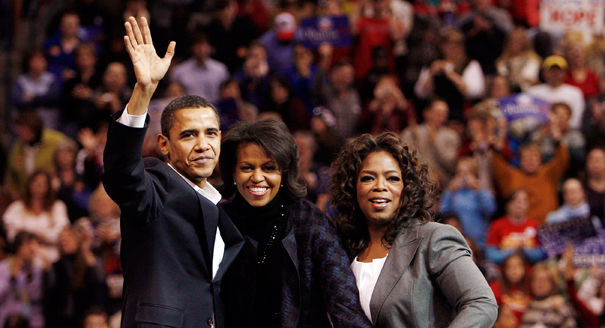
Oprah Winfrey’s contributions to African American participation in governance are rooted not in holding public office, but in reshaping political consciousness, civic engagement, and democratic participation. At a time when many African Americans felt disconnected from political power, she used her immense cultural reach to make governance feel personal and relevant. Through her television show, magazine, speeches, and public conversations, Oprah consistently linked political decisions to everyday realities education quality, healthcare access, family stability, and economic opportunity. Doing so, she demonstrated that governance is not confined to legislatures and elections alone, but includes informed dialogue, ethical leadership, and the courage to participate in shaping public life.
Historically, African Americans faced entrenched barriers to governance, including literacy tests, poll taxes, voter intimidation, and systemic exclusion from policymaking spaces. Even after the Civil Rights Movement dismantled many legal obstacles, psychological barriers such as distrust of government and feelings of political powerlessness persisted. Oprah rose to prominence in this environment. As a trusted voice welcomed into millions of homes daily, she became a bridge between institutions of power and communities long excluded from them. Her visibility alone challenged historical norms, signaling that African Americans could not only participate in governance but also shape national conversations about it.
One of Oprah’s most significant contributions lies in political education. On The Oprah Winfrey Show, she interviewed sitting presidents such as Bill Clinton and George W. Bush, as well as political candidates, civil rights leaders, and scholars. These interviews were not confrontational spectacles but thoughtful conversations that explained policies in human terms. For example, discussions on welfare reform, education funding, and healthcare reform were framed around how they affected families and communities, particularly Black families. This approach demystified governance and empowered African American viewers to engage with political issues without feeling intimidated or excluded.
Oprah also played a crucial role in encouraging voter participation. While she avoided constant partisan messaging, she repeatedly emphasized voting as a moral and civic responsibility. On her platforms, she highlighted the historical struggles that secured voting rights for African Americans, connecting present-day participation to past sacrifice. During election seasons, her discussions often stressed that abstaining from voting allowed others to decide one’s future. By framing voting as an act of dignity and self-determination, Oprah helped normalize civic engagement among audiences shaped by generations of political disenfranchisement.
Her endorsement of Barack Obama during the 2008 U.S. presidential election marked a watershed moment in African American political engagement. Oprah’s support was especially significant because it came early, before Obama was widely seen as a viable candidate. She appeared at campaign events, spoke openly about his leadership potential, and framed his candidacy as a moment of collective possibility rather than symbolic politics. Studies later suggested that her endorsement influenced voter turnout, particularly among undecided voters and first-time African American voters. This moment demonstrated how cultural authority could be converted into concrete political participation.
Beyond elections, Oprah amplified African American perspectives on critical policy issues. Her programs addressed mass incarceration by featuring formerly incarcerated individuals and legal experts, connecting criminal justice policy to family disintegration and community instability. She hosted conversations on healthcare disparities, highlighting how systemic neglect disproportionately affected Black communities. Discussions on education reform often centered on underfunded public schools and unequal access to opportunity. By grounding policy debates in lived experience, Oprah ensured African American voices were central to democratic discourse rather than peripheral to it.
Oprah’s contribution to governance also includes leadership modeling. She embodied a form of influence that was calm, ethical, and principled, countering stereotypes that framed Black leadership as aggressive or radical. Her measured tone, emphasis on listening, and refusal to engage in inflammatory rhetoric reshaped public perceptions of African American authority. On global stages—such as her speech at Nelson Mandela’s memorial or her addresses at international forums—she demonstrated that Black leadership could be both morally grounded and universally resonant.
Her philanthropic initiatives further intersected with governance by addressing areas where public policy often fell short. Through the Oprah Winfrey Foundation and the Oprah Winfrey Operating Foundation, she invested heavily in education, leadership development, and youth empowerment. Programs supporting debate, literacy, and leadership training cultivated skills essential for civic participation. By strengthening the educational and moral foundation of young African Americans, Oprah indirectly expanded the pipeline of future voters, advocates, and policymakers.
Importantly, Oprah broadened the definition of political participation itself. She showed that shaping public opinion, influencing narratives, and asking critical questions are also acts of governance. In interviews with political leaders, she often raised issues that reflected the concerns of marginalized communities, poverty, race relations, trauma, and inequality. In this sense, she functioned as an informal civic representative, voicing questions that many African Americans could not ask directly within traditional power structures.
Oprah also promoted inclusive governance by fostering dialogue across racial, cultural, and ideological divides. She invited guests with differing viewpoints and encouraged respectful conversation rather than hostility. For example, her discussions on race relations often included voices from multiple communities, emphasizing shared responsibility rather than blame. This approach modeled democratic values such as pluralism, accountability, and mutual respect, values essential for sustainable governance in diverse societies.
Over time, Oprah’s influence inspired a generation of African Americans to see governance as accessible rather than alien. Many journalists, activists, nonprofit leaders, and public servants have cited her as an early influence in shaping their civic awareness. By consistently presenting Black perspectives in serious national conversations, she normalized African American participation in spaces of power, from media to policy influence.
In sum, Oprah Winfrey’s contribution to African American participation in governance lies in her unique ability to connect culture with citizenship. She transformed media influence into civic engagement, personal narrative into political awareness, and visibility into voice. Though she never sought elected office, her impact on democratic participation is profound and enduring. Oprah’s legacy affirms that governance is shaped not only by those who hold power, but also by those who awaken communities to their own political agency and responsibility.
Author: Moses A. Katamani
Email: infomoskambel@gmail.com
Website: www.kambelconsult.com