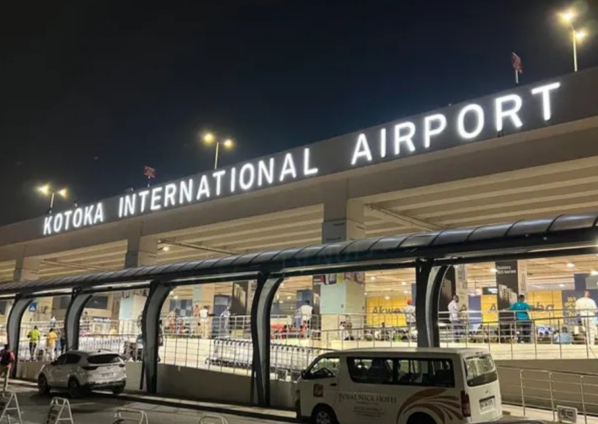
In a previous news analysis on the proposed renaming of Kotoka International Airport to Accra International Airport, I argued that Ghana, as a constitutional democracy, must be deliberate about the symbols it chooses to honor. That article emphasized the need to align national institutions with democratic values rather than the legacy of military interventions, which disrupted Ghana’s political development for decades. Since that publication, a number of responses have emerged; some thoughtful, others highly emotional, and many strongly opposed to the position expressed. These reactions illustrate that the conversation is far from settled, and that symbols such as national airports carry deep historical, political, and emotional significance for citizens. They also demonstrate that even seemingly administrative decisions, like renaming a public facility, can spark a national debate about memory, values, identity and prejudices.
What has been most striking, however, is that while disagreements have been loud and visible, the principles behind some of these objections have not always been clearly articulated. In a democratic society, disagreement is not only natural but necessary for healthy debate and policy-making. Yet, for a national conversation of this magnitude, it is crucial that opposing views are grounded in clear constitutional, historical, or philosophical reasoning rather than sentiment, political loyalty, or ethnic framing. Without clarity, debates risk becoming polarized, personal, and, at worst, divisive, moving away from the central issue which is the role of value principles in shaping national memory.
The ongoing national conversation about the proposed renaming of Kotoka International Airport has therefore revealed not only differing opinions, but also differing foundations for those opinions. Some of the resistance appears to be based on emotional attachment to history, nostalgia for certain figures, or a sense of regional identity, rather than on principle. While disagreement is natural in a democratic society, what has become increasingly unclear is the underlying logic or philosophy guiding some of these objections. For a democratic society that claims to uphold constitutional values, it is important that public debates about symbols of state are framed around reasoned argumentation and civic responsibility rather than personal sentiment.
At its core, the debate is not about personalities, tribes, or partisan loyalties. It is about a constitutional question: should a democratic republic continue to name its principal international gateway after a leading figure in a military coup that disrupted the country’s constitutional order? This is not merely a symbolic debate; it is a reflection of how Ghana wishes to define its national identity, communicate its values to the world, and teach future generations about the importance of constitutional governance. The airport, as the nation’s main gateway, is more than a transport hub, it is a national symbol, and the question of whose name it carries matters deeply in the collective consciousness of the country.
Many of those opposing the renaming have expressed strong emotions, but have not always articulated the constitutional or philosophical basis for their positions. Some appear to assume that preserving Kotoka’s name is a matter of honoring historical memory, without examining the fact that his most consequential national role involved leading a military overthrow of the elected government of Dr. Kwame Nkrumah. Do these opponents believe that coups can be separated from the individuals who led them? Do they see the airport’s name as a neutral historical marker? Or do they believe that national symbols should reflect democratic values, even if that requires revisiting past choices? Without clarity on these points, the debate risks drifting from principle to sentiments, bigotry or regional loyalty.
These are legitimate questions because they strike at the heart of how democratic societies reconcile their past with the values they aspire to uphold. A democratic society thrives not on silence or conformity, but on reasoned disagreement that is firmly anchored in principle. When arguments shift from constitutional reasoning and principles to tribal or regional sentiment, the debate risks losing its moral clarity, potentially deepening divisions rather than strengthening civic cohesion. Ghana’s ability to reflect critically on its past without weaponizing identity is a key test of its democratic maturity.
The conversation has also drawn comparisons with the legacy of former President Jerry John Rawlings, who himself came to power through military intervention. Some argue that if the principle against honoring coup leaders is applied to Kotoka, then it should also apply to Rawlings. This is a valid question, but it must be examined within the full context of history. Rawlings’ story, while complex, differs in important ways from Kotoka’s: his tenure included a transition from military rule to constitutional democracy, contested elections, and the peaceful transfer of power, all of which contributed to consolidating Ghana’s democratic system rather than undermining it.
Rawlings’ political journey was not static. While his early years were defined by military coups, he later transitioned into democratic leadership, contested elections through constitutional means, and most importantly, handed over power peacefully after serving two terms. That peaceful transfer of power became one of the most significant milestones in Ghana’s Fourth Republic, demonstrating to both citizens and the world that even leaders who began as military rulers can embrace constitutional democracy. This evolution is central to understanding why Rawlings’ legacy is often considered distinct from that of leaders who acted primarily in the service of military interventions without democratic transition.
The late Professor Ali Mazrui once observed that Rawlings “started as a dictator, but ended as a democratic leader.” This assessment reflects the complexity of political legacies. Leaders, like nations, can evolve over time, and their final contributions often shape how history remembers them. It underscores the importance of judging historical figures not solely by their beginnings, but by their full trajectory and ultimate impact on the democratic development of the nation. This perspective allows for a nuanced understanding that neither glorifies unconstitutional actions nor ignores the democratic contributions made later in life.
From a principled standpoint, this raises an important question: should a nation judge its leaders solely by how they came to power, or also by how they governed and how they ultimately left office? Some may argue that Rawlings’ early role in coups permanently complicates his legacy, while others may point to his later democratic leadership as justification for measured national recognition. Both positions, if grounded in principle, are intellectually defensible. The key is that the debate remains rooted in constitutional reasoning, historical honesty, and democratic values rather than partisan or ethnic sentiments.
What matters most is consistency. If Ghana’s national symbols are to reflect democratic ideals, then the standards applied to historical figures must be fair, clear, and free from selective reasoning. The conversation should not be about tribe, regional loyalty, or political partisanship, but about constitutional values, civic ethics, and national identity. When consistent principles are applied, Ghana can demonstrate that it honors democracy as a system, not merely as a rhetorical claim, and that its institutions reflect the values it wishes to uphold for future generations.
It is also worth noting that Rawlings himself did not actively pursue the naming of national monuments after him. Much of his recognition came as a result of his place in Ghana’s political history rather than from any personal desire for memorialization. This distinction is important: honoring someone who shaped history through democratic contribution differs from celebrating someone primarily for participation in unconstitutional acts. It highlights the difference between commemoration based on democratic achievement and the implicit endorsement of undemocratic interventions.
Finally, the airport renaming debate presents an opportunity for national reflection. It invites Ghanaians to consider what values their public institutions should represent, and how the nation should remember its complex past. Restoring the airport’s original name, Accra International Airport, would not erase history, it would contextualize it, emphasizing that Ghana values constitutional rule, civic responsibility, and national unity above celebration of undemocratic acts.
If there is disagreement, it should be expressed clearly and honestly, grounded in constitutional philosophy and historical reasoning. A mature democracy is not one without disagreement, but one in which disagreements are shaped by principle rather than prejudice. In this way, Ghana can honor its past, celebrate its democratic present, and inspire its future.
Author: Moses A. Katamani
Email: infomoskambel@gmail.com
Website: www.kambelconsult.con